

Table of Contents
The development of these unique solid-state batteries is under growing debate.
Called solid-state batteries, these sophisticated solid-state batteries for electric cars have the power to help to propel the move to electrified véhicule even more than before.
One interesting new development is replacing the solid electrolyte produced from safe and robust materials with the standard liquid electrolyte found in lithium-ion batteries. This technology has showed enough promise to attract interest from many producers, not including the major ones.
A novel form of battery
The development of these unique solid-state batteries is under growing debate. Though not yet in large-scale commercial manufacturing, all indications point to a fast rise in momentum for this novel approach in the next years.
After a long period of study and innovation, we are actually seeing a steady rise in development mostly driven by the market for electric drones and robots, which will probably be major users of this kind of battery.
It is therefore not surprising that these batteries are becoming more important to the military given drones and robotics. Thus, important markets are drawing near. Actually, a number of forward-thinking businesses in the commercial industry are already near to release of their products.
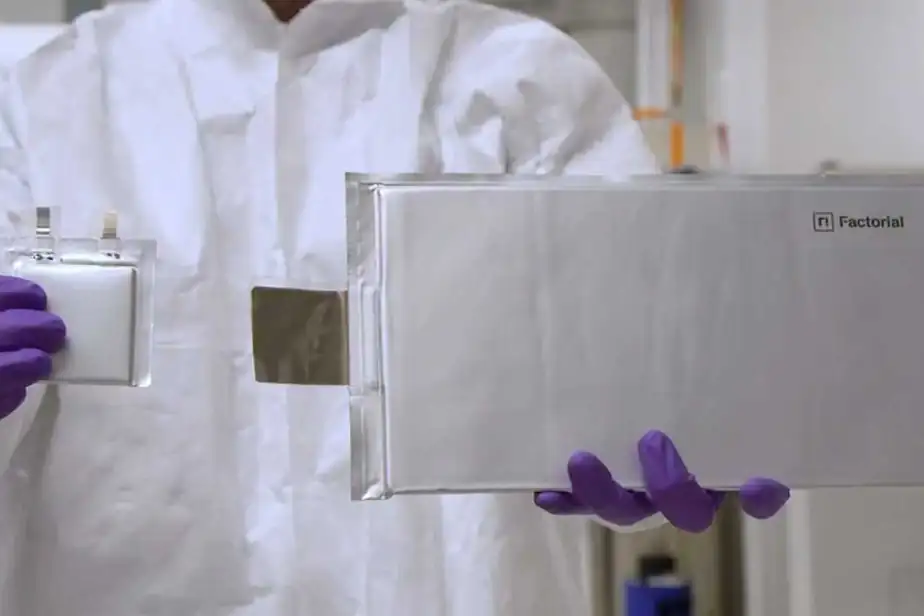
Energy factorial
Young and ground-breaking American company Factorial Energy is in front of the businesses developing the foundation for this new solid-state battery for quite some time.
Factorial Energy decided to go ahead in 2022 as interest in this unique technique began to rise, therefore getting significant financial support from the private sector totaling $200 million from automotive titans Mercedes-Benz and Stellantis. Hyundai and Kia have also come out in support of the American project.
Since then, Stellantis—the parent business of well-known brands including Jeep and Ram—has shown extraordinary excitement and hopes to include this technology into its cars by end of 2026. The business stresses in its disclosures that this battery is especially helpful for areas like Canada and Quebec since it can withstand temperatures between -30 and +45 degrees Celsius. The company also says that the battery lets you charge up to 90% in only 18 minutes, which seems very cool.
Mercedes too has made it to the testing stage. The carmaker drove over 1200 kilometers without needing a single charge last autumn testing a updated Mercedes EQS fitted with Factorial Energy’s solid electrolyte batteries.
With Factorial Energy and Cartesian Growth Corporation III—a branch of the American private equity company Cartesian Capital Group—working together on financial strategies, another improvement was made in December of last year.
Factorial and Cartesian III announced a fresh strategic alliance last February, this time working with the Korean company Philenergy, which will take part in manufacturing to further slow down advancement. Philenergy’s exceptional stacking technology helps to speed up the general project schedule as it is superior to that of other businesses in the secondary battery equipment market.
Simultaneously, Factorial Energy keeps working on its projects, expanding its reach since it is now integrating into the developing drone sector to serve the defense industry rather than limiting its concentration on solid-state electric véhicule batteries to those intended for road use.
When will the program be made available?
Up to now, American electric véhicule producers have not made a formal announcement regarding the use of the new battery technology. Still, in February Karma Automotive, the local car company, said it intended to start the first manufacturing line for solid-state batteries in the United States, especially for passenger véhicule , in partnership with Factorial Energy.
Factorial is poised to supply Karma, a California-based company that intends to use this invention in their next-generation véhicule platform, with batteries. Karma has even said that it will start this project with its all-electric Karma Kaveya Super model.
Might this development transform the electric vehicle sector? Only time will tell the solution. Only after the formal introduction of this new technology will we be able to determine its readiness.-véhicule
For more updates on electric véhicule technology and automotive innovations, explore other articles on AutoBullion.