

Table of Contents
Britain’s road today has enough to reach the Moon; moreover, the system is growing.
Actually, you make perfect sense. The United Kingdom has sufficient roads now to theoretically reach all the way to the moon. Although it may seem overdone, the numbers back this assertion.
Later Division for Transport information show that Incredible Britain’s street arrange will have come to almost 247,200 miles by the conclusion of 2025. Compared to 2005, this measurement outperforms the entire by more than 6,000 miles. Although a little increase of 2.5% over the last two decades, the total road distance is still significant given the vastness of the underlying infrastructure.
For viewpoint, there were 241,139 miles of street logged in 2005. This figure reflected an 11 percent rise over the past twenty a long time. So, even if the rate of growth has slowed down, the road network in Britain has steadily grown throughout time.
Where Traffic is most concentrated
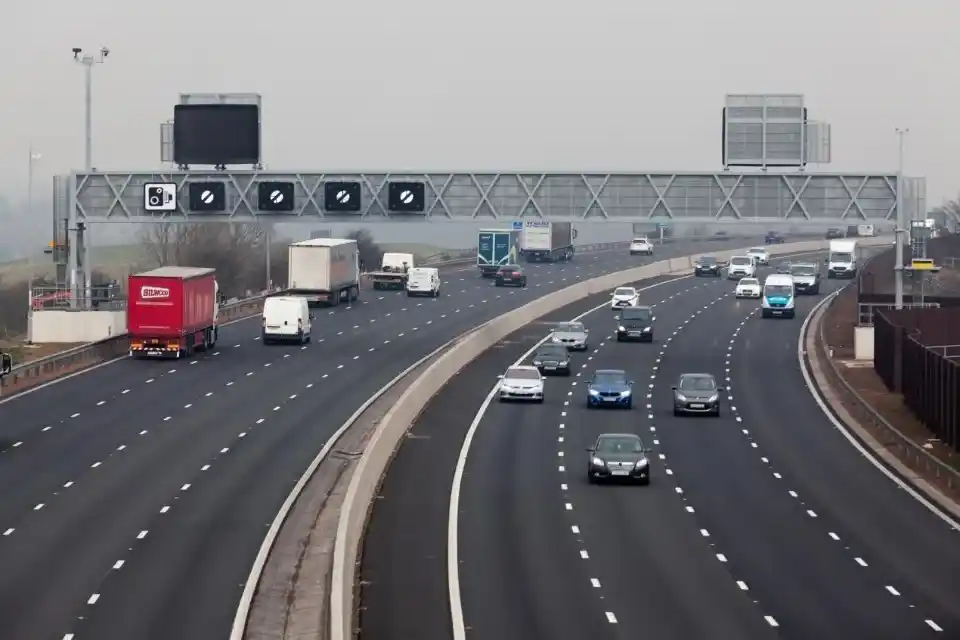
This is when the circumstances start to be interesting. Though they only make up a shockingly little percentage of the entire network, Britain’s motorways and A-roads manage most of the traffic load.
Motorways and A-roads account for roughly 65 percent of all distance covered by drivers These important arteries, however, account for just 13% of the network’s overall length. Britain boasts around 29,700 miles of A-roads and 2,300 miles of motorway.
This implies that less B, C, and local roads make up the great part of the remaining 247,200 miles. One surprising fact here is: On an average day, one stretch of motorway sees 55 times the traffic of a comparable B or C road section.
Road use, then, is not consistent. Most of the load is carried by a relatively tiny proportion of high-capacity pathways.
Leading the network is England.
Looking at the statistics geographically, England has the overwhelming bulk of the road network. England accounts for 189,900 miles out of Great Britain’s 247,200 total, therefore a notable portion.
Wales and Scotland together make up fewer than one-fourth of the entire network. While Scotland has almost 21,100 miles of road, Wales has roughly 37,200 miles. These figures represent the degree of economic activity as well as population patterns. The dense metropolitan regions and business centers of England demand for a larger infrastructure.
Growth is tapering; by design.
Large-scale road construction could be declining despite the continuous expansion observed over the last twenty years. The Government’s Infrastructure Strategy released last year shows that public funding would be more directed toward improving the condition of current roads than toward further enlargement of the system.
This shift points to a new priority. Instead of building more road miles, the focus is on maintenance, safety, and repairs.
Many drivers will probably be happy to hear this news.
The Problem with Potholes
Though the United Kingdom might have enough asphalt to go to the moon, the state of that surface reveals a different story.
Projections indicate over a million potholes on UK roads. Fixing the roadways in England and Wales to an ideal level, the Asphalt Industry Alliance claims, might cost up to £16.8 billion.
This number emphasizes an underlying problem: One thing is improving the network, but upkeep is completely other. The roadways suffer more stress as the number of vehicles on them grows and their weights rise, especially with the increasing popularity of electric cars.
The circumstances are really clear-cut. Continuous repair problems result from an increasing road network.
Driver’s Perspective
For average drivers, these figures tell two tales concurrently. One side of Britain has one of Europe’s largest road networks, adequate to go to the moon and beyond. Conversely, road conditions and traffic congestion are still major problems.
Most journeys are handled by motorways and A-roads; thus it’s probable their upkeep will get top priority going ahead. Simultaneously, the less roads—which make up most of the network—will need repair to ensure both safety and longevity.
The Broader Perspective
In spite of the fact that the 6,000-mile increment over the past 20 a long time may as it were reflect a 2.5 percent development, it outlines how framework creates along with populace development, financial request, and moving travel designs.
As Britain approaches the following decade, the emphasis seems to be going from quantity to quality. Rather of asking, “How many more roads can we construct?” legislators appear to be questioning, “How can we improve the existing roads?”
And maybe that’s the right query.
Driving to the moon requires a lot of road, after all; thus, it is remarkable. Making sure those highways are smooth, secure, and appropriate for contemporary travel could be much more important.
For more auto industry updates, road infrastructure news, and global car trends, visit our channel Autobullion and stay ahead of the curve.