

Table of Contents
Helping to offset declines in operating profits were vehicle sales in North America, its biggest worldwide market, which were at their highest level since 2017.
Dive Brief:
As detailed in its profit explanation on Friday, Toyota Engine Organization appeared a year-on-year income increment of 9.6% ($255.6 billion) owing to more prominent deals volume for the nine-month period finishing December 31, FY2026.
• Still, amid the nine-month period, the company’s working benefit year over year fell from $24 billion to $21.5 billion, whereas net pay dropped nearly 25%, from $26.8 billion to $20.3 billion.
• The car manufacturer reported that U.S. taxes on Japanese automobile imports, which would have cost its operational income by almost $8 billion, mostly influenced the reductions. Toyota further reduced its earnings as a result of increasing labor and operating costs in its main worldwide markets.
Dip Insight:
The near 10% rise in net income helped Toyota offset the profit decreases. With 7.3 million units sold globally during the nine-month period ending December 31, 2025, the corporation announced record-high consolidated vehicle sales, an increase of around 302,000 cars. With the exception of Asia—where sales decreased by 53,000 units—sales rose in all major world regions.
Toyota’s largest worldwide market, North America, saw an odd operating loss of $40 million in the first nine months of FY2026 even while vehicle sales in the region were strong. Operating income had dropped roughly $1.4 billion year-over-year against a profit of $1.3 billion the preceding year; hence, this was ascribed. The business also pointed to tariff pressures as among the contributing causes of the loss along with other elements including rising expenses.
Toyota’s automobile sales in the U.S. were the best since 2017 despite these obstacles. Reflecting an 8% increase (275,000 units) in volume, sales of 2,518,071 automobiles in the U.S. last year showed high demand for some of its most popular models.
Toyota had its best ever U.S. sales for the Camry and Corolla Hybrid, RAV4, Grand Highlander, and Tacoma in 2025. Exclusively offered with a hybrid engine, the Camry sedan registered 316,185 units sold—a 2% year-over-year increase. With 248,088 units sold generally, the Camry and Corolla developed 6.5% year-over year.
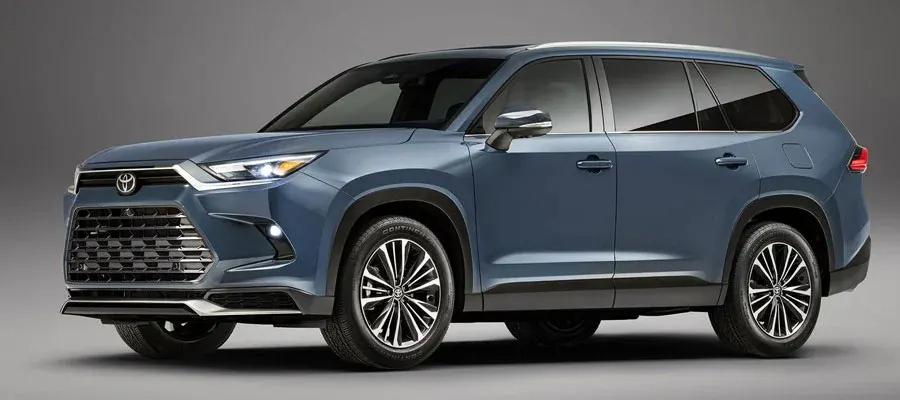
In 2025, deals in the SUV and truck portion were particularly solid. Whereas midsize Tacoma pickup truck deals expanded by 42.4% every year to 274,638 units, the Toyota Amazing Highlander had a surprising surge of 90.7% to 136,801 vehicles.
With 479,288 cars sold in 2025—a one percent rise over the year before—the RAV4 also did remarkably well for Toyota in the United States. Through December, Sienna minivan deals were additionally tall at 101,486 units, speaking to a 35.2% volume growth.
Looking toward the future, Toyota gauges add up to solidified vehicle deals to reach 9.75 million units for FY2026, which closes on Walk 31. Net income is figure to develop by around 4%, hence coming to $333.3 billion. Still, the projected drop in earnings will most likely have a major effect on the general financial performance of the firm.
Toyota projects a year-over-year drop of 20.8% in operating income, whereas net income is expected to fall by roughly 25% from the prior year to $23.8 billion—a condition the corporation blames mostly on tariff pressures.
Toyota’s most recent financial results point to a company struggling with strong demand amid growing cost pressures. Profit challenges show the rapid impact of outside economic conditions on performance even though worldwide automobile sales remain robust. The almost 25% drop in net income emphasizes the consequences of trade fights and rising operating expenses, especially in North America. Despite record sales in the United States and high demand for hybrids, expenses associated with tariffs still hamper profit margins. Although Toyota’s attitude points to some resilience in revenue development, persistent tariff pressures and high labor expenses could severely limit its ability to maintain consistent long-term profits even with a good global sales trend.
Read more expert automotive insights and breaking news on Autobullion.